

 Español
 Ingles
 Frances
 Italiano

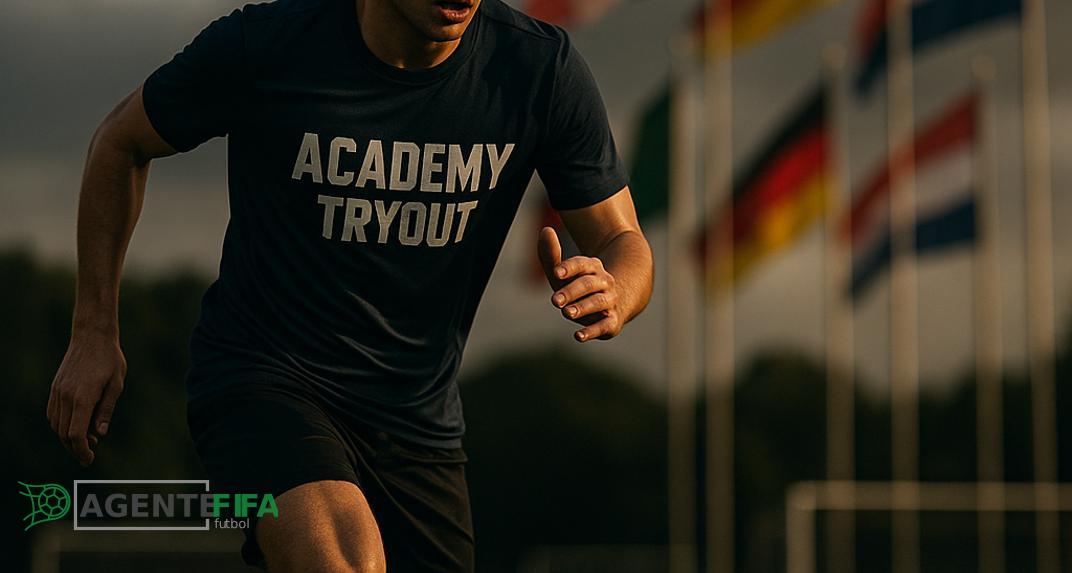
Football trials in Europe represent one of the most important entry points for players aspiring to make the leap to professional football. Every season, thousands of footballers participate in these processes, but only a few manage to stand out.
As an agent with experience in the international arena, I've been able to observe firsthand how these trials work and, above all, what differentiates the players who progress from those who fall by the wayside.
In this article, I'll explain what these trials are really like, what clubs are looking for, and how you can prepare to increase your chances.
What are football trials?
Football trials are selection processes organized by clubs, academies, or agencies, with the goal of evaluating players for potential inclusion on their teams.
They can be classified as:
Open trials: any player can register
Private or closed trials: access by invitation or recommendation
Professional trials: organized by clubs or official partners
During these sessions, coaches, sporting directors, and scouts analyze much more than just visible talent.
What do clubs look for?
A common mistake is thinking that only technique matters. In reality, clubs value a well-rounded profile:
Tactical intelligence: The ability to understand the game, position oneself correctly, and make quick decisions.
Individual technique: Control, passing, dribbling, and finishing under pressure.
Physical condition: Speed, stamina, and explosiveness adapted to the competitive pace.
Attitude and mentality: Commitment, discipline, communication, and adaptability.
Teamwork: How you interact with teammates and coaches. This carries much more weight than it seems.
When technical skill levels are equal, the player with the best attitude is almost always chosen.
Tips for preparing for a trial:
Preparation doesn't start on the day of the trial. It starts weeks beforehand.
Progressive physical conditioning: Don't arrive unprepared. Work on endurance, changes of pace, and position-specific actions.
Specific technical training: Reinforce your strengths and correct basic errors (first touch, body positioning, decision-making). Study the context
Learn about the club: playing style, competitive level, philosophy.
Mental training
Visualize real-life situations: under pressure, making mistakes, reacting quickly.
Details that make a difference
Absolute punctuality
Appropriate equipment
Good communication on the field
Positive body language
Many trials are decided by small details.
The importance of mindset
I've seen highly talented players miss out because they couldn't handle pressure… and others with less technical skill stand out because of their personality.
During a trial:
Don't play with fear of making mistakes
Don't hide: ask for the ball
React quickly after a mistake
Maintain consistent intensity
Scouts highly value the ability to compete under pressure.
Conclusion
Football trials in Europe are a great opportunity, but they are not just a formality: they are a very demanding filter. If you want to excel, you need:
Physical and technical preparation
Game intelligence
A competitive mindset
A professional attitude
Every challenge, even if unsuccessful, brings you closer to your goal if you learn from it.